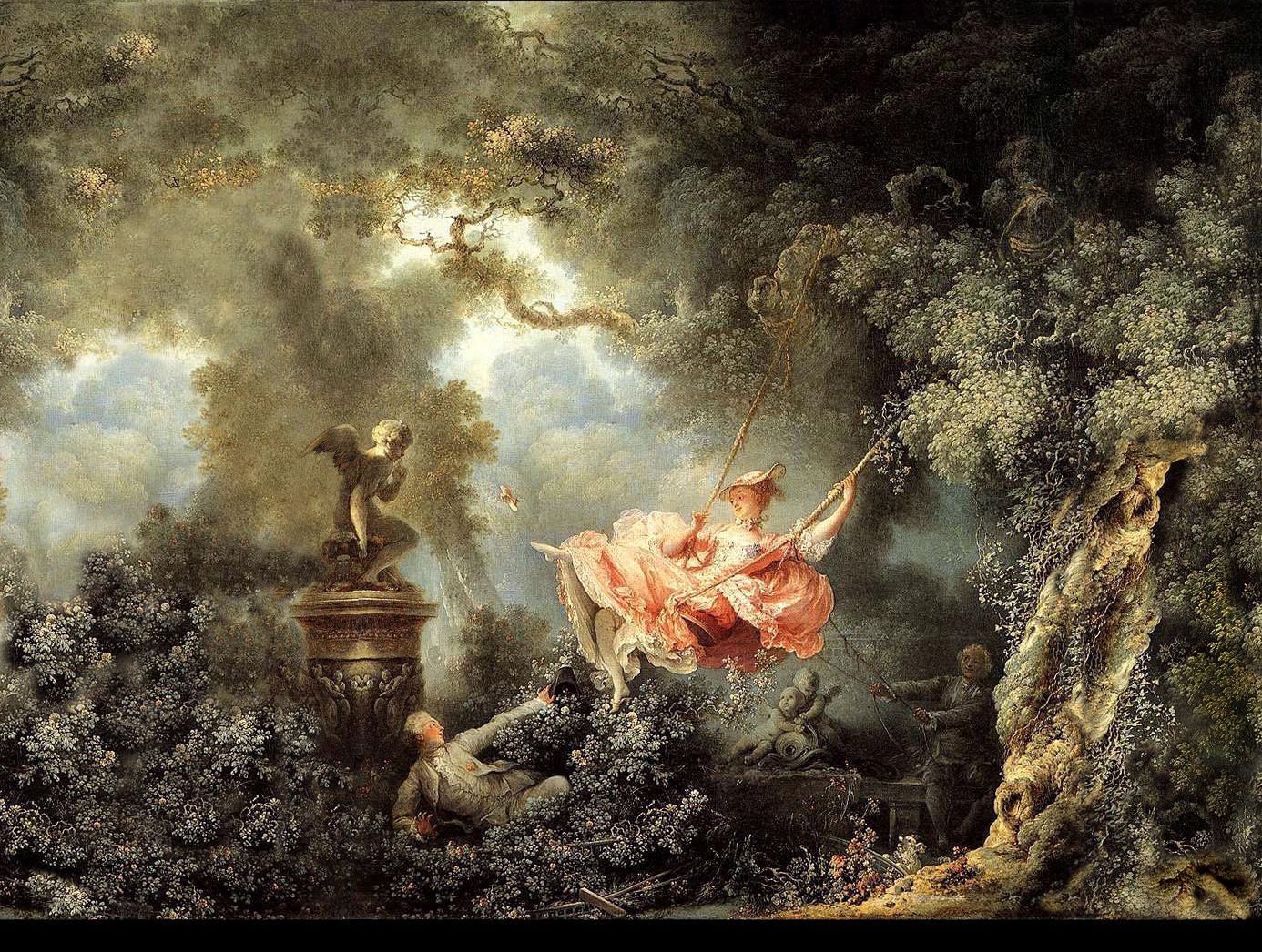
The 18th century is when air and light become just as important a part of the painting as people and objects
Watteau, Boucher, Fragonard, Tiepolo, Canaletto, Gainsborough, and early Goya assemble a language of light scenes where everything seems to exist inside soft illumination.
")
They paint with a freer, quicker brush, yet rely on precise architecture: parks, pavilions, terraces, city squares, palace halls. Figures are no longer "cut into" the background but slightly dissolve into the air: outlines are softened, shadows more transparent, space seems filled with a light haze. Ceiling paintings expand the sky inside a room, cityscapes become panoramas that can be multiplied as engravings and hung like windows into other places.
Color functions as illumination and mood
A few new pigments are added to the palette, such as Prussian blue, but the basic structure remains the same: earths, lead white, mineral blues and greens, organic reds. The true "pastel quality" comes not from some magical new color but from the way these are used: abundant white, thin glazes, pastel technique, chalky underlayers. This is how the powdered pinks, blues, light greens, and soft grays are born — what we now automatically call "typical 18th century."
Instead of dense light/dark contrast, a play of half-tones emerges: everything seems dusted with light. Blues and gray-blues create a sense of morning or distant air, pinks and creams evoke bodily closeness and "salon warmth," cool greens and grays suggest distance and observation. The same motif can be made almost saccharine, melancholic, or solemnly cold — simply by changing the temperature and density of tones.

The pastel palette that today is associated with something "gentle" was also in the 18th century a sign of control: such subtle transitions require good pigments, careful work, and time.
Textiles and the dress code turn life into a stage set
Silk brocades, cloth of gold, Indian and Chinese fabrics, cotton chintz with large flowers fill interiors and wardrobes. Fabrics become a global commodity: they are shipped, copied, reimagined; manufactories are built for them and new dyes invented.
Dyes — indigo, madder, cochineal, plant-based yellows — are used in lighter concentrations, on bleached silks and cottons, with smooth satin weaves.
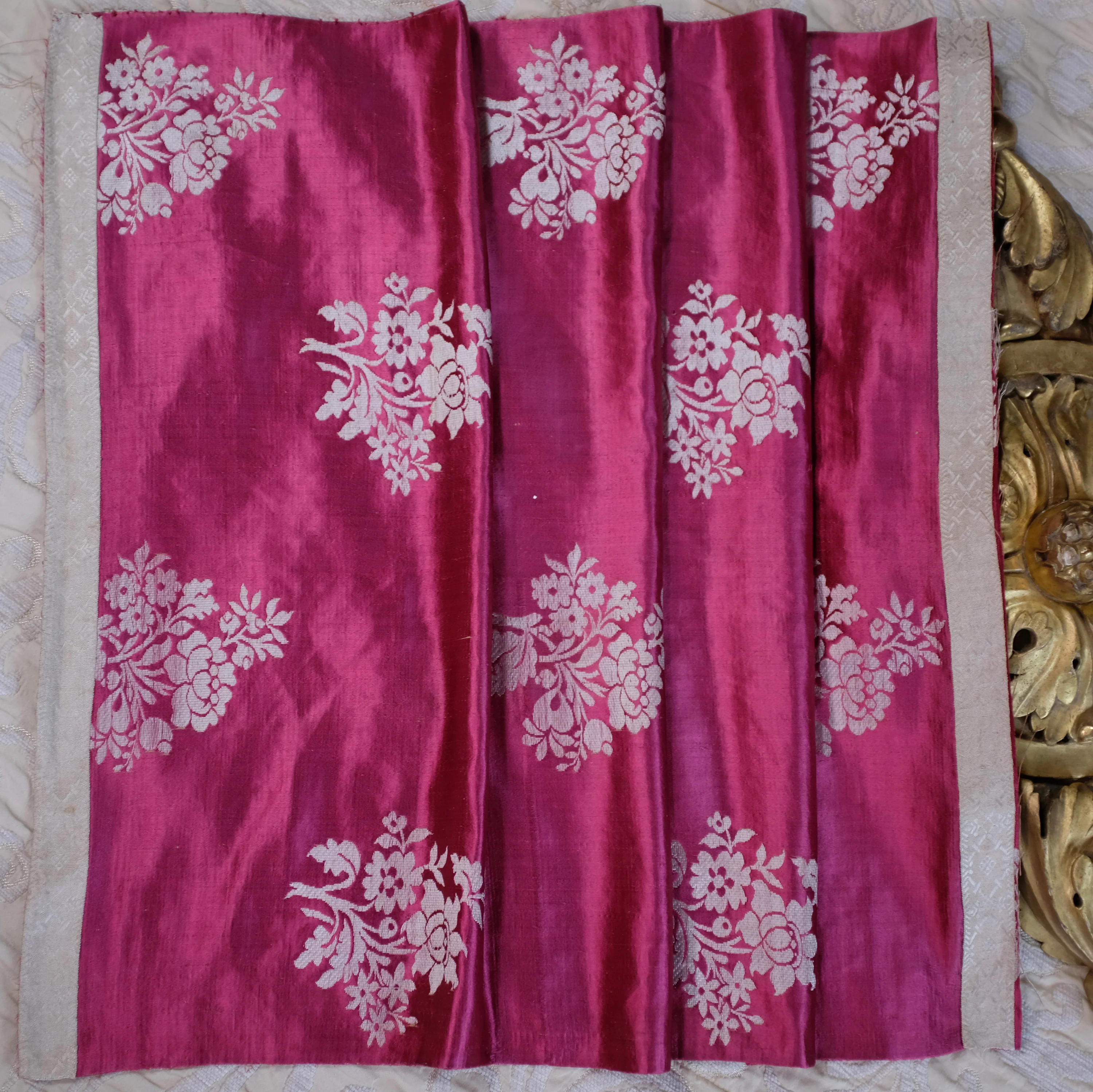
Laws attempt to limit luxury, but increasingly say not "forbidden" but "unfashionable" or "inappropriate to status"
The dress code shifts from strict prohibitions to navigation by "good taste": where something is excessive, where insufficient, where "à la française," and where too provincial.
For men, the role of silhouette and trim grows in the costume: the length and line of the coat, the quality of the waistcoat, the neatness of lace, the color of the vest, the shape of the hat. French court opulence and the more restrained English variant provide two poles: spectacle and "natural" elegance. Between them all other roles are arranged — from aristocrat to prosperous townsman.
In women's clothing this is especially pronounced: the dress becomes a true construction
Wide skirts on frames, elaborate backs with a long pleat (robe à la française), a tightly laced bodice, and on top — patterns, lace, bows, ribbons. A woman literally carries part of the interior on herself: the same fabric might be on the walls, on the chair, and on her dress.
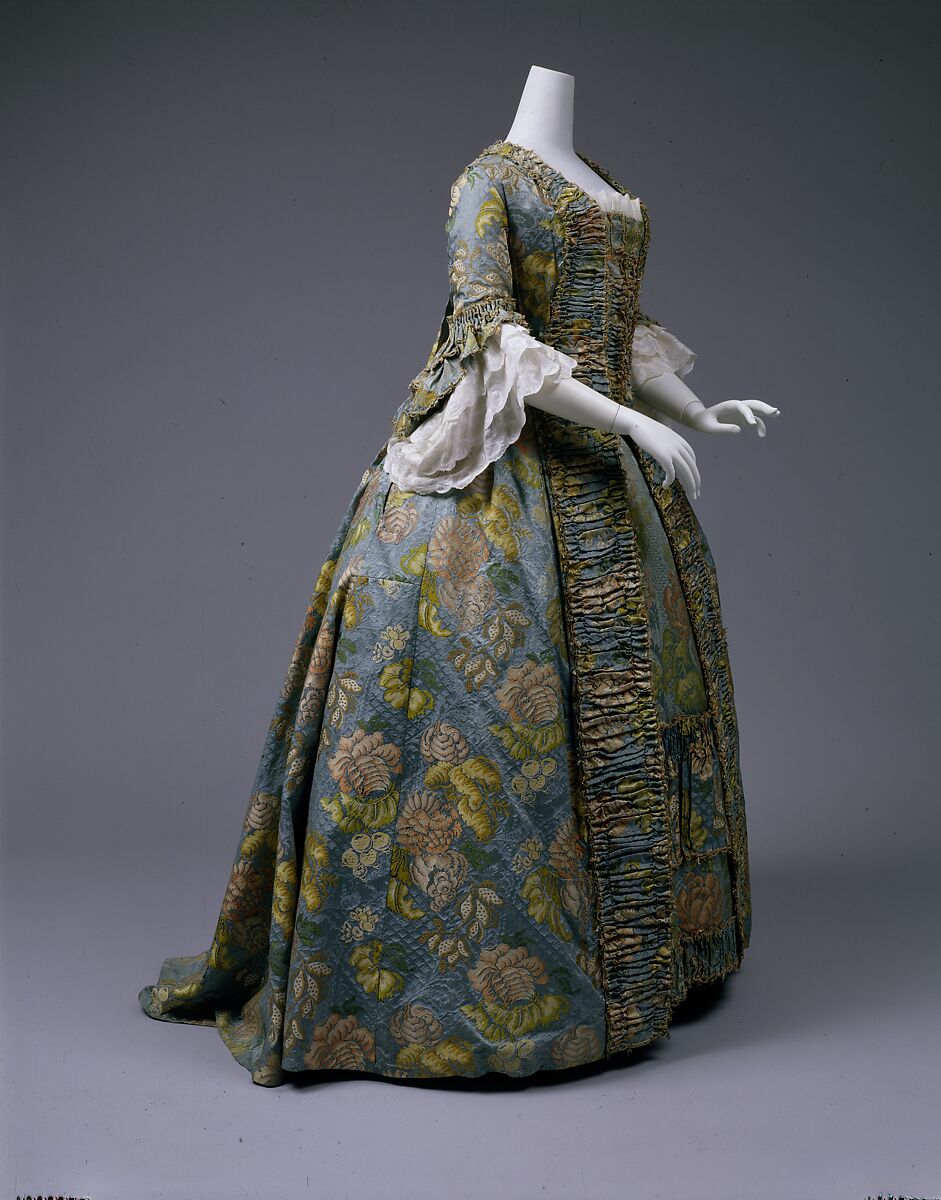
Hair becomes a separate tier of the look: powder, ornaments, feathers, small compositions. At the same time, simpler English dresses and "simpler gowns" for informal situations appear — the first steps toward less constraint and "naturalness."
Clothing meanwhile demands looking carefree, but within this image the tension only increases
The 18th-century ideal is an image where everything seems light: the dress like a cloud, the park like a stage set, conversation like a game. But behind every such lightness lie the weight of fabric, the rigidity of the corset, a long list of unspoken rules — who, where, when, and in what may appear. A painting by Watteau or Fragonard shows a carefree fête galante scene, while an actual robe à la française requires hours of preparation, money, and constant self-control.
Pastel lightness and "natural" grace become something like a daily exam: if you look heavy, tired, or unkempt, you are failing the role. The habit of constantly monitoring whether the dress is creased, whether the wig has "melted," whether the rouge has smudged, instills within a feeling that one's own body is a project for maintaining an image rather than a place where one can simply be.
The 18th century leaves the impression that the world is increasingly decorated as a "pleasant picture," but the more airy the surface appears, the harder it becomes to ignore the cost of this lightness — in labor, time, bodily and social tension beneath the layers of silk.