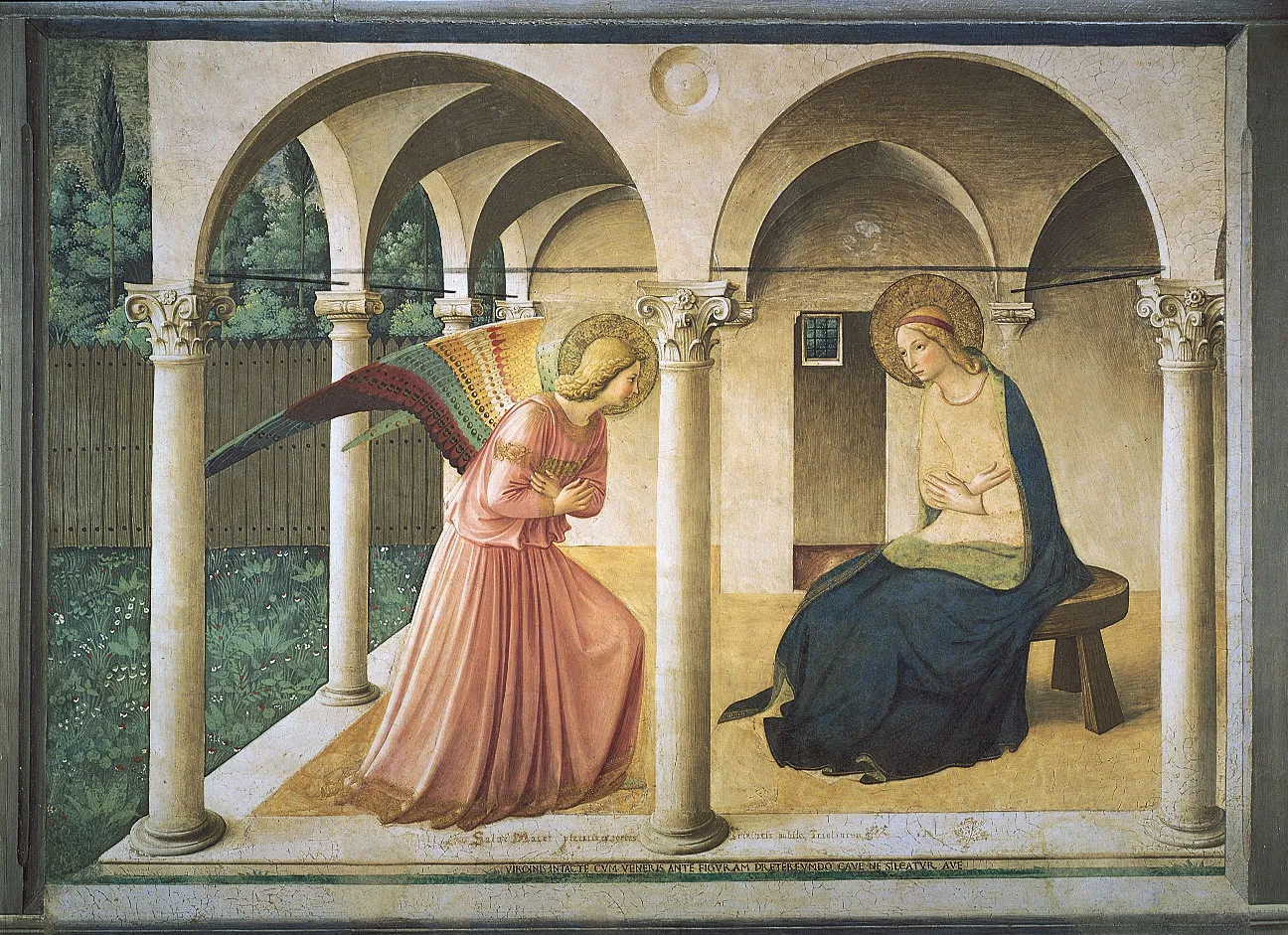
Before 1500, artists could already do much more with images than "flat icons" - Giotto, Masaccio, Piero della Francesca, Fra Angelico, and Jan van Eyck assembled a new visual language
The main field for painting was icons, altarpieces, wall frescoes, and book illumination — that is, images embedded in the church, liturgy, and prayer practice. Hence the originally golden and highly conventional background, the flat plane around figures.
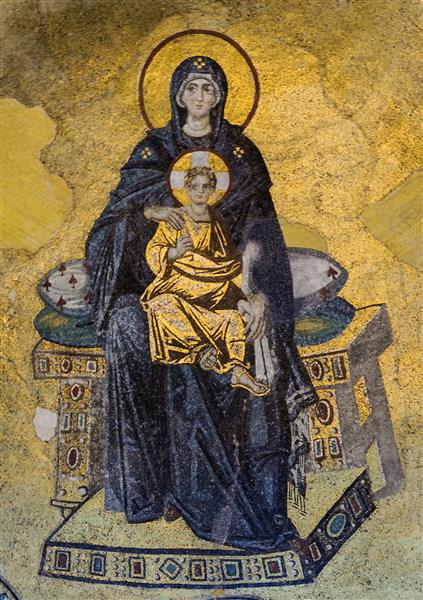
At first, artists worked with tempera and early oil, building the body in volume, capturing the weight of folds. Gradually, the first attempts at perspective appeared: in Giotto, Masaccio, and Lorenzetti, steps, arches, and niches recede into depth; figures stand not just side by side but already in a defined space. A little later, with the northern masters and early oil, even more subtle effects were added: the gleam of metal, reflections in water, distinctions between stone, skin, and fur.
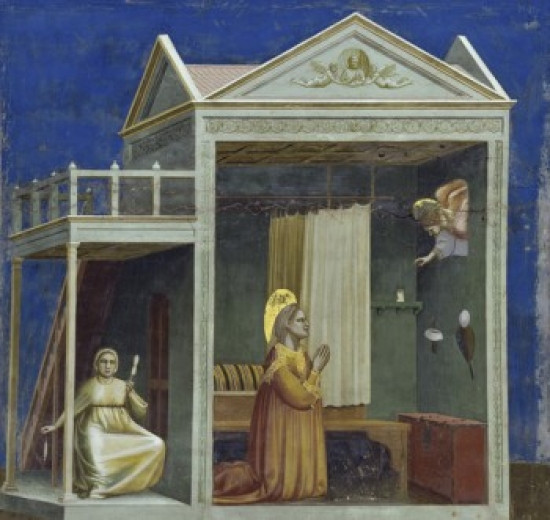
Yes, gold and flat backgrounds still hold the image in a sacred frame, but within that frame there is an increasing sense of the material world: living faces, recognizable gestures, convincing objects and fabrics that are already very close to those worn by real people.
Color works simultaneously as technique, symbol, and emotion
The artist had at hand: ochres and earths (sienna, umber, and others), lead white, charcoal, rare expensive blues from lapis lazuli, cinnabar, organic reds, copper-based greens. With these few pigments, everything had to be solved: lighten and deepen form, assemble composition, separate the main from the secondary. The technique of tempera and early oil was not about endless choice of shades, but about precise decisions within a narrow palette: lighten with white lead, leave "raw" earth, place a single accent of pure color.
At the same time, each color in the limited palette of available paints carried not only a mood but also a stable meaning: red was associated with blood, sacrifice, and power; blue — with the sky and the Virgin Mary; gold — with divine light, which literally reflected the candles at service. Red made a scene tense and solemn, blue cooled and deepened, gold gathered attention and marked what was most important.
And all these meanings were tightly bound to the possibilities of craft: what could be extracted from soil, from insects, from stone — that would be on the palette and in clothing. Expensive blue and saturated red went to the mantles of saints and the highest figures; more common earths and muted greens remained for the majority. The viewer instantly understood: who was "closer to the light" and who stood lower — even before having time to grasp the subject.
The most complex and expensive impressions were actually worn on the body
Linen and coarse wool — the daily norm. Fine wool, velvet, silk, fur — something not just beautiful, but legally reserved for certain people.
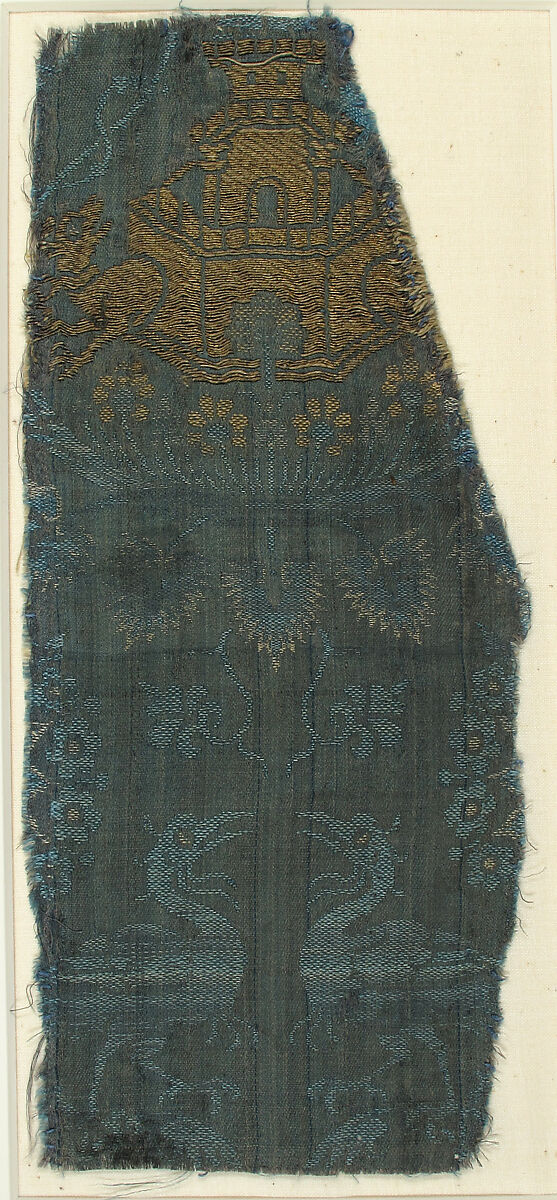
Complex fabrics went to the chosen few. Raw materials for silk and silk fabrics traveled along long trade chains through Byzantium, Italy, the East, each intermediate point raising the price. For the ordinary townsman, this was material from the realm of legends; actual silk dresses and mantles were concentrated in the church and at court, where a single outfit could rival the cost of a small house.
It was scarce and expensive, but precisely for that reason, every silk ribbon or sleeve proclaimed wealth and life's pleasures too loudly. As soon as merchants and prosperous townspeople gained access to even small silk details, cities began to prescribe in their laws who was actually allowed to appear in silk — and who could only look.
Cities and crowns issued dozens of sumptuary laws: who was permitted furs, how much gold could be sewn onto a dress, what length of train was acceptable at a wedding. Violations were prosecuted and fined both by law and by social disapproval.
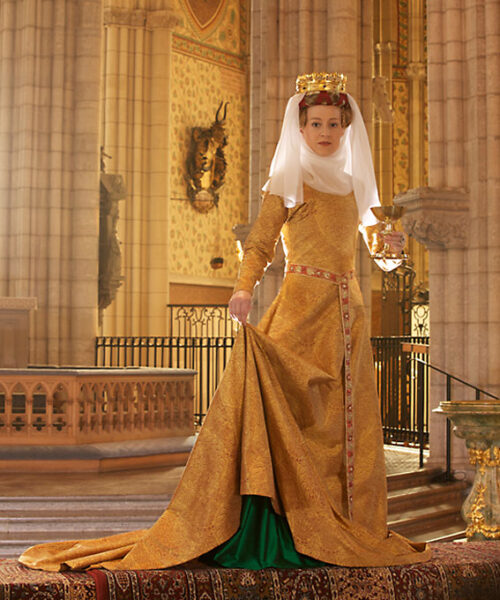
This was especially visible in women's clothing: layered dresses, under- and over-shirts, lacing, complex sleeves, mandatory headdresses. Hair was usually covered; the neckline of the dress, the length of sleeves, the width of the belt, and the amount of fabric in the skirt were directly related to age, marital status, and position in the city. The outfit of a married townswoman, a widow, and a noblewoman would differ even where the basic form of the dress was similar.
That is why the same motif of "saint with mantle" is read very differently in painting and in life
A painting could already show the texture of fabric and the play of light, but the real social signal came from an actual cloak: its color, density, trim, combination with the rest of the costume. One glance was enough to understand who was before you: a craftsman, a judge, a cleric, a widow, a wealthy bride. The limited set of dyes and fabrics made this system especially convincing: if expensive blue or fine silk were simply inaccessible, then the thought "I could look different" hardly arose.
Psychologically, this supported the feeling that hierarchy was not the result of someone's decisions, but part of the structure of the world: just as climate, soil, and faith were given, so too were the color and quality of your clothing. A person wore what was prescribed by law and went to war by order for the same reason: this was how the surrounding order worked. The divine was concentrated in the gold and radiance of the image; everything else remained almost flat, inexpressive, unworthy of special attention and its own voice.
Next part of the project - 16th Century: Painting as Engineering, the Emergence of "Fashion"